Case study 12 — Content generation and publishing
SEO Automation Platform
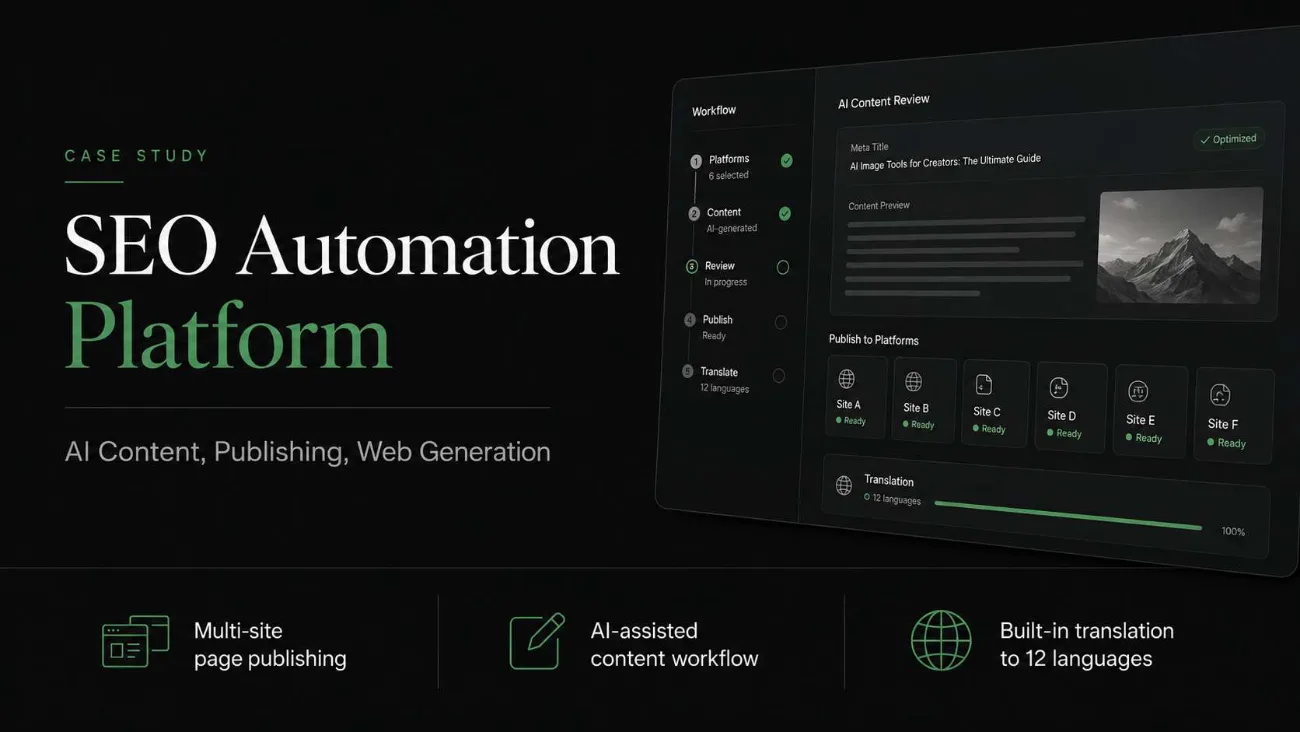
SEO content production is a pipeline pretending to be a series of unrelated tasks. Research, SERP analysis, drafting, review, publishing and translation usually happen in as many tools as there are steps, with the output re-keyed at every boundary. We built the pipeline explicitly.
- Next.js
- TypeScript
- Fastify
- AI content generation
- GitHub
The problem
Producing search content across several properties means repeating the same sequence per site, per page and per language, with structure and quality drifting at each handoff and no single place to see what has been published where.
What we built
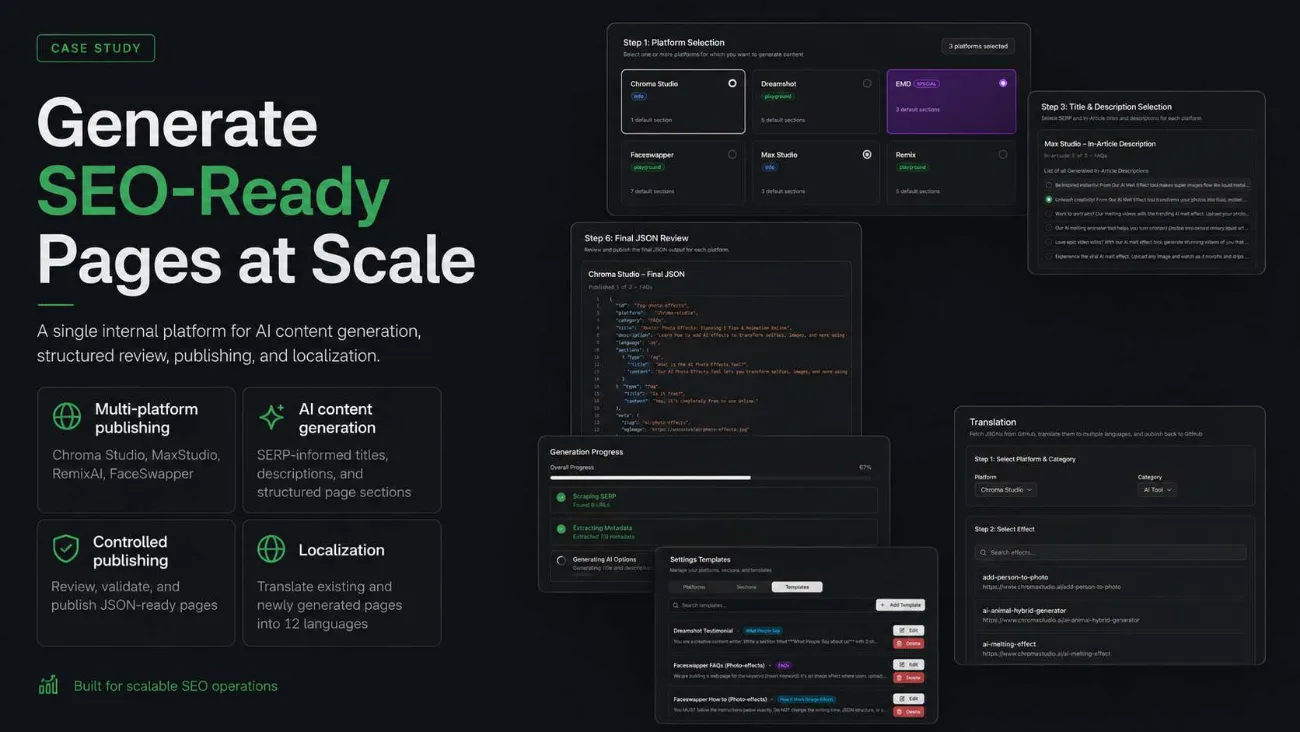
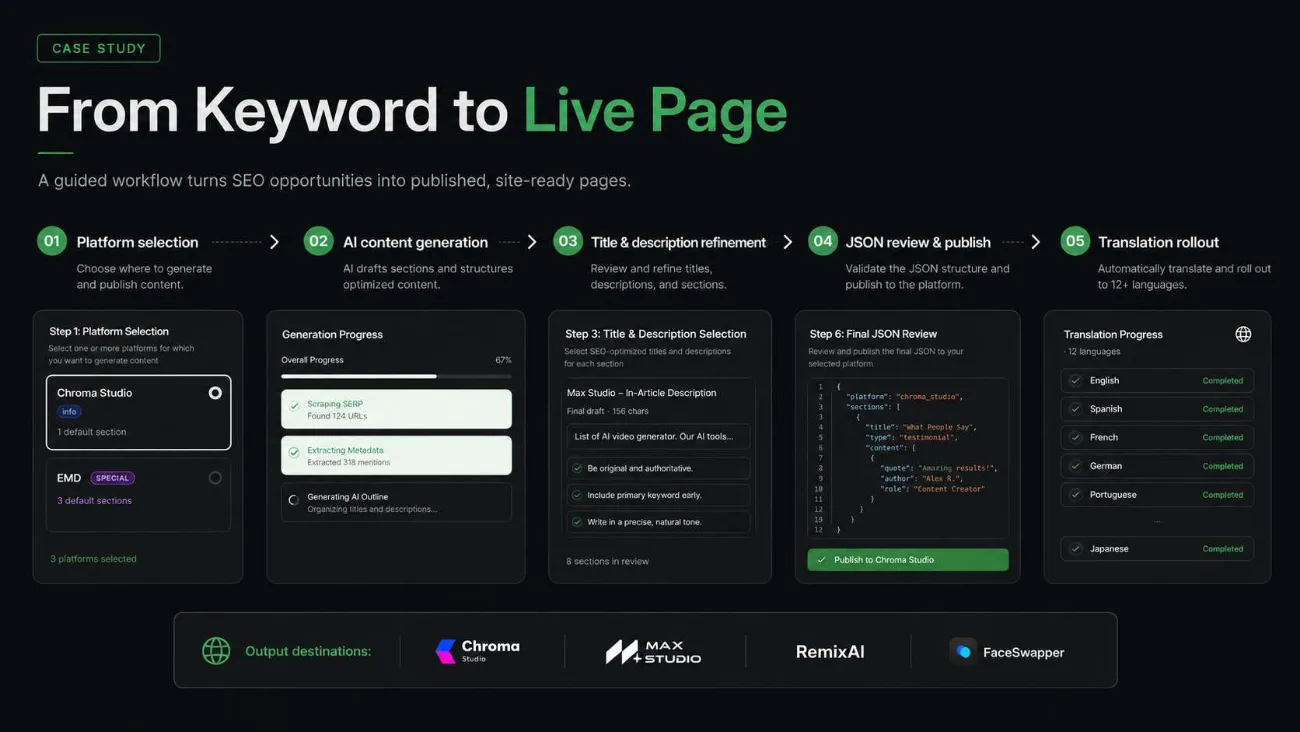
A guided five-step workflow, platform selection, AI content generation, title and description refinement, JSON review and publish, translation rollout, sitting on a configurable base of platforms, sections and templates, publishing to connected repositories.
How it works
A workflow that shows its working
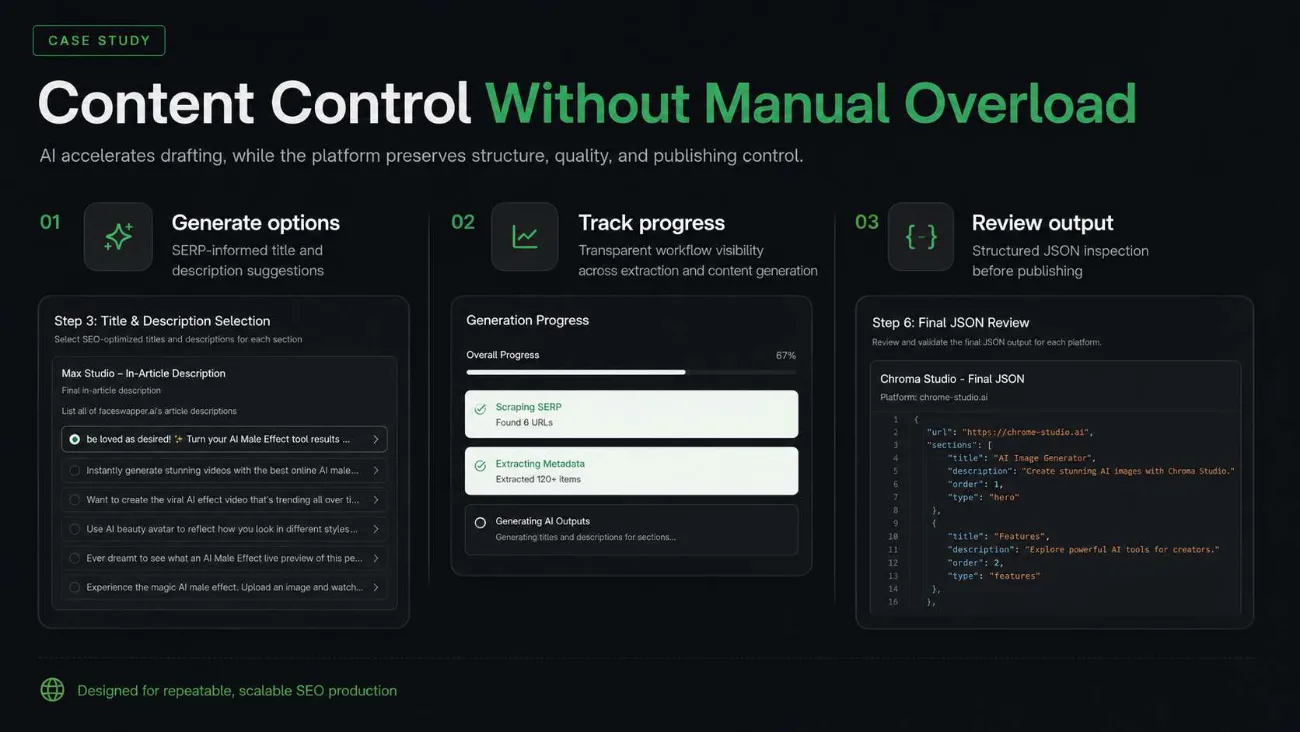
Generation progress surfaces the real steps rather than a progress bar: scraping the SERP and reporting how many URLs it found, extracting metadata and reporting how many mentions, then generating the outline.
SERP-informed drafting, human-selected
The platform generates several title and description options informed by live SERP data, and a person picks. AI accelerates the drafting; it does not get the final say on what ships.
Structured review before anything publishes
The final artefact is inspected as JSON, platform, sections, order, type, so structure is validated before a page reaches a live site, and a malformed section is caught in review rather than in production.
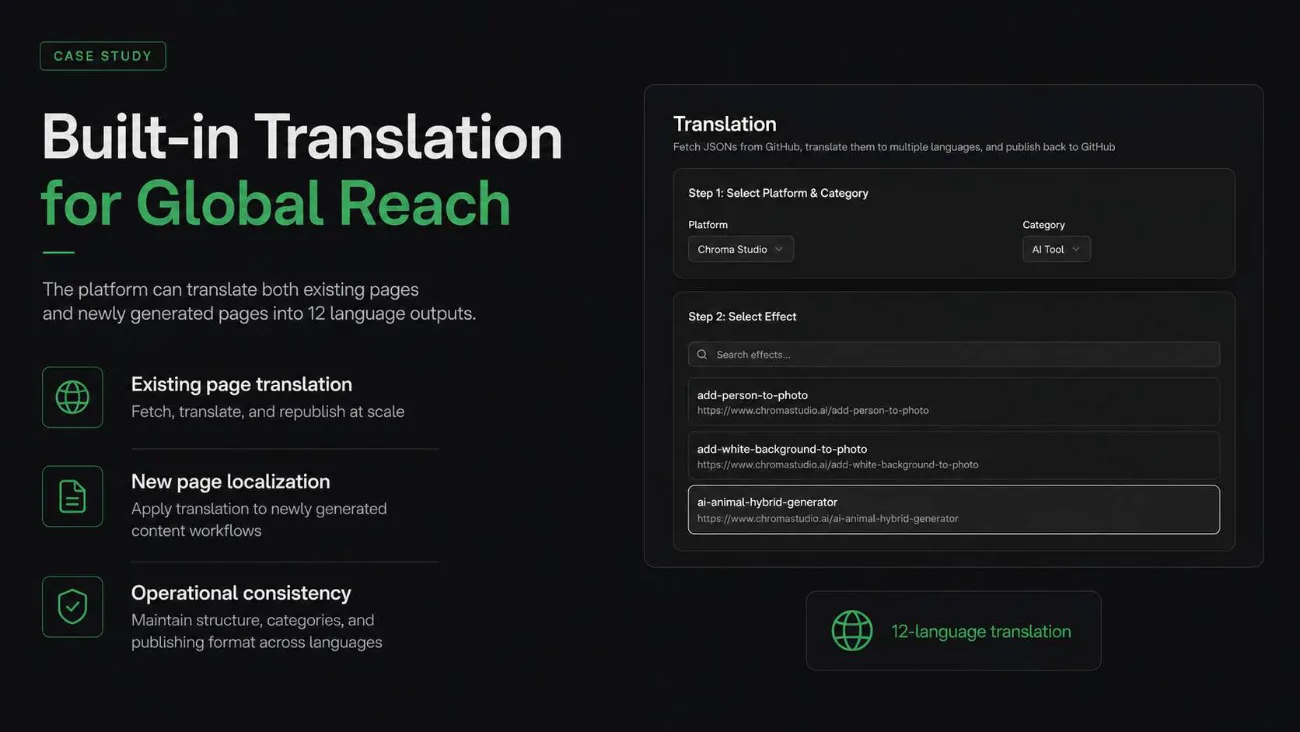
Translation as part of the same pipeline
Existing and newly generated pages are fetched from the repository, translated into twelve languages and published back, keeping structure, categories and publishing format consistent across every locale.
Reusable across brands
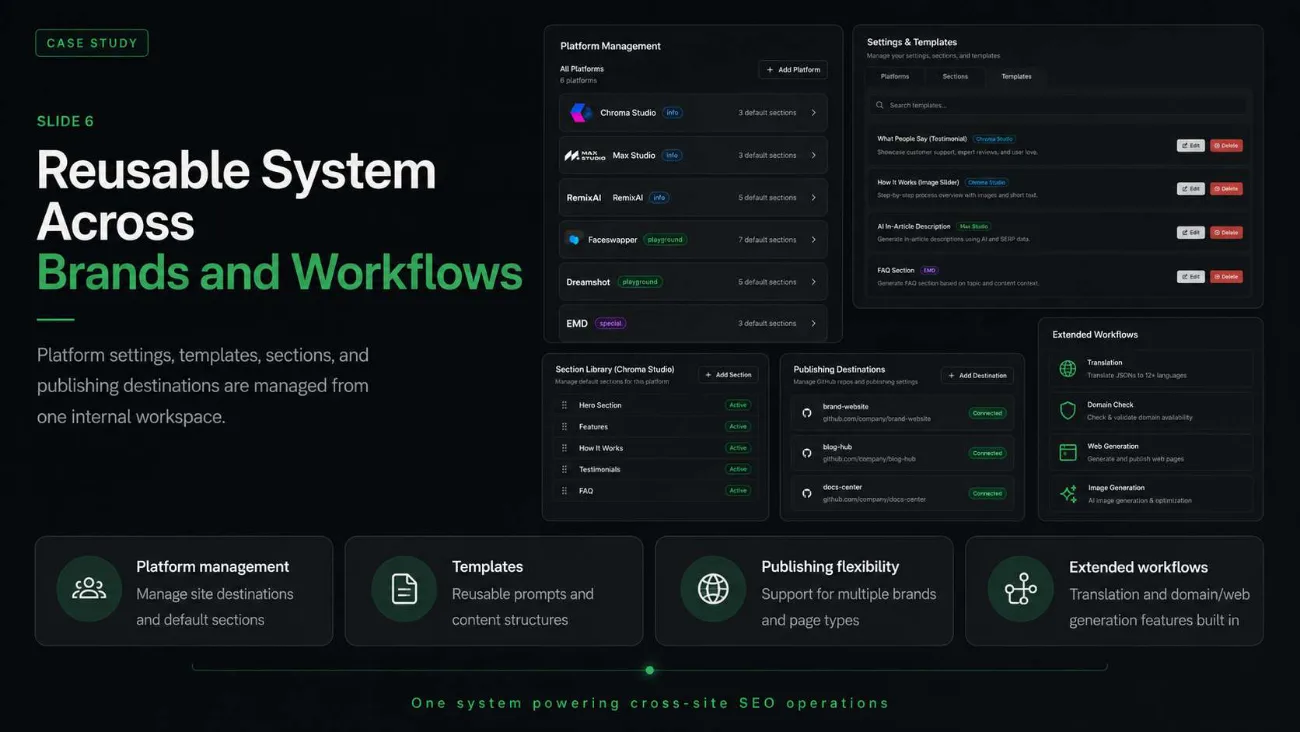
Platform destinations, default sections, reusable prompt templates and a per-platform section library are all managed from one workspace, so adding a property or a page type is configuration rather than a code change.
Extended workflows around the core
Domain checking and validation, web generation and AI image generation sit alongside the content pipeline, so the steps either side of publishing live in the same system.
In the product
Outcome
Keyword research through to a published, localised page runs as one continuous workflow across several properties, with structure preserved and publishing control kept in human hands.