Case study 09 — Website generation automation
AutogeniX
Most site generators produce a plausible homepage and stop. The interesting question is whether one system can produce fifty sites that do not look like each other, and whether what comes out is a launchable product page rather than a hero section with filler underneath.
- Python
- Multi-agent architecture
- Next.js
- Vanilla HTML/CSS

The problem
Generating a site in one pass gives you generic design, broken references and no path to production. Whoever asked for it still has to review it, fix it, find assets and deploy it, which is most of the work.
What we built
A coordinated network of specialised agents, each owning a phase of the lifecycle: requirements, design intent, blueprint, implementation, validation, review, assets and deployment. Failures inside a phase trigger targeted fixes rather than restarting the run.
How it works
Beyond a hero section
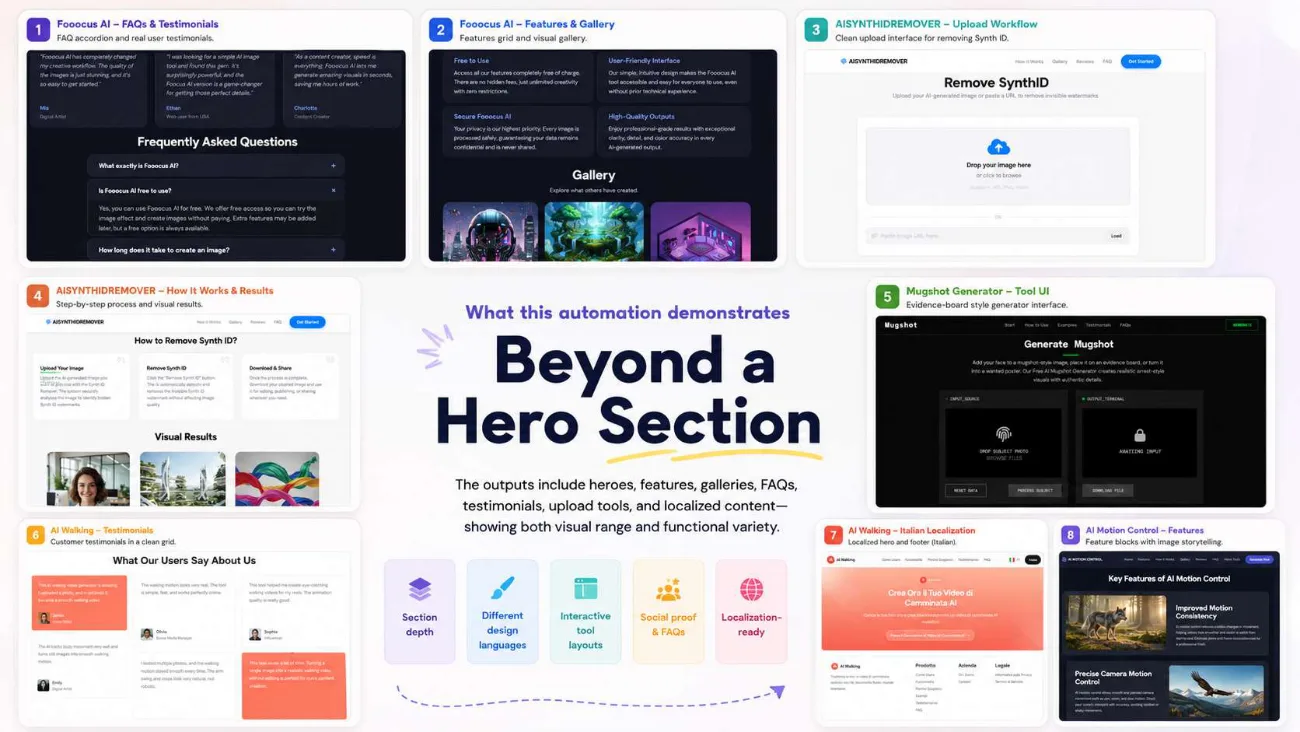
Outputs include heroes, feature grids, galleries, FAQs, testimonials, interactive upload tools and localised content, the sections a page needs to actually convert, not just to look finished at the top.
A design check that rejects generic output
The system generates its own palette, typography and layout strategy, then evaluates the result for originality and forces regeneration when it reads as repetitive. That gate is what stops fifty generated sites looking like one template.
Different design languages per niche
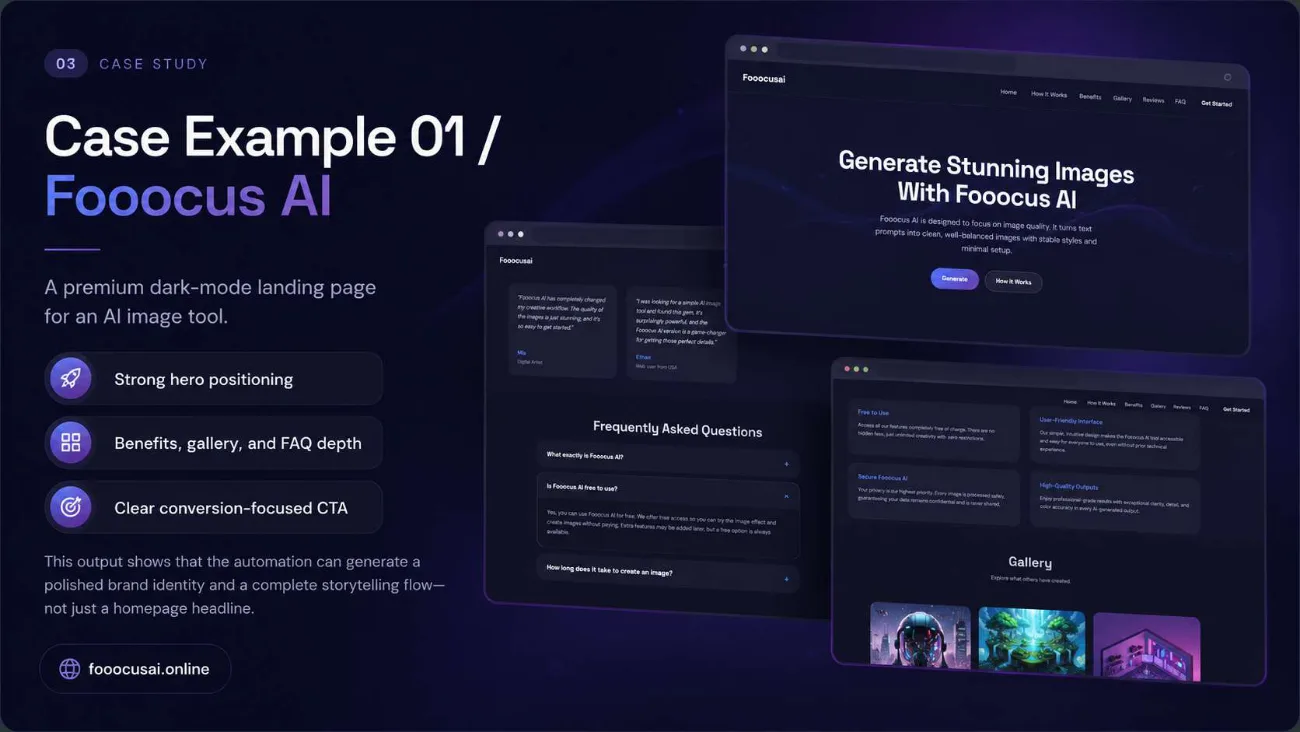
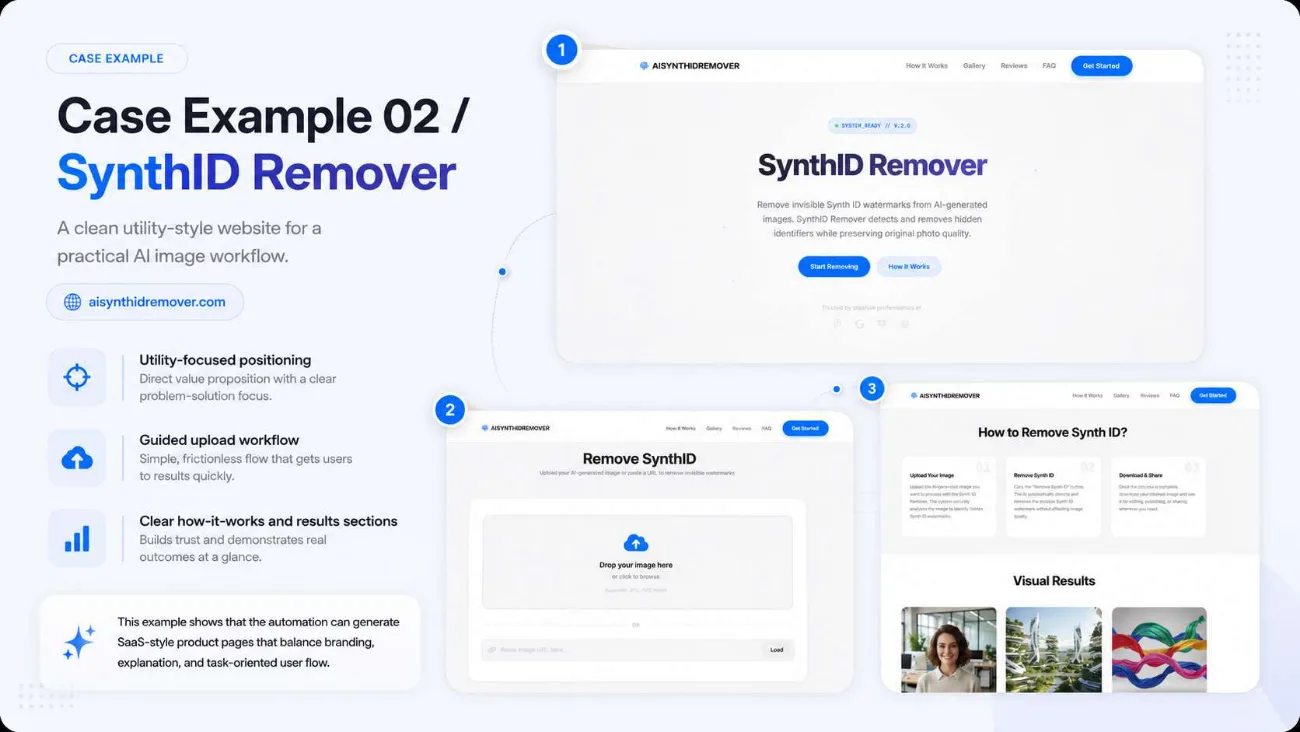
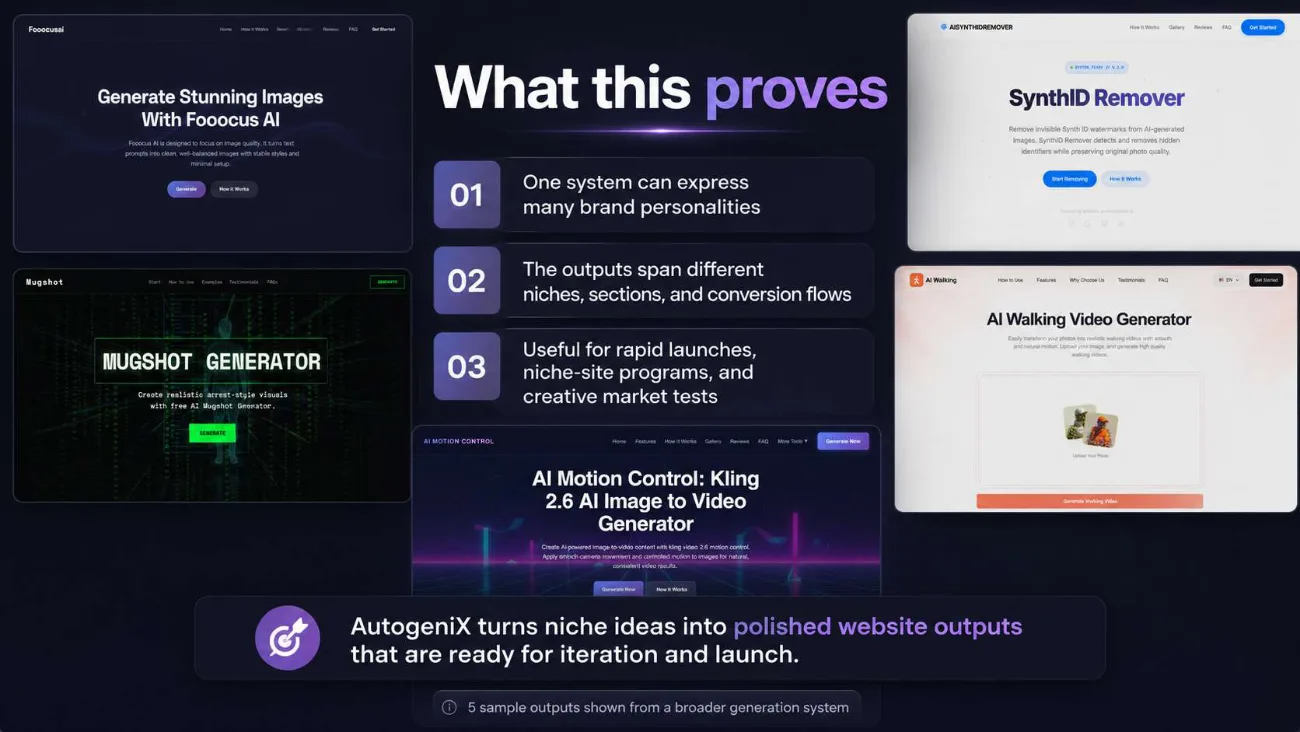
The sample outputs span a premium dark-mode landing page for an image tool, a clean utility-style site for a practical workflow, an evidence-board aesthetic for a generator, and a neon high-energy build for a motion product, from one system.
Interactive tool layouts, not just marketing pages
Generated sites include working upload flows and guided how-it-works sequences, so the output is a product page with a task in it rather than a brochure.
Localisation-ready
Generated sites carry localised variants, one of the samples ships an Italian version of its hero and footer, so a launch is not limited to one market by the generator's own assumptions.
Ends at something launchable
The pipeline packages the project, pushes it to a repository and deploys it, returning a live URL. Several of the sample outputs are live domains rather than screenshots.
In the product

Outcome
One system that expresses many brand personalities, spans different niches, sections and conversion flows, and is useful for rapid launches, niche-site programmes and creative market tests. It turns a niche idea into a polished website output ready for iteration and launch.