Case study 08 — Agentic AI media platform
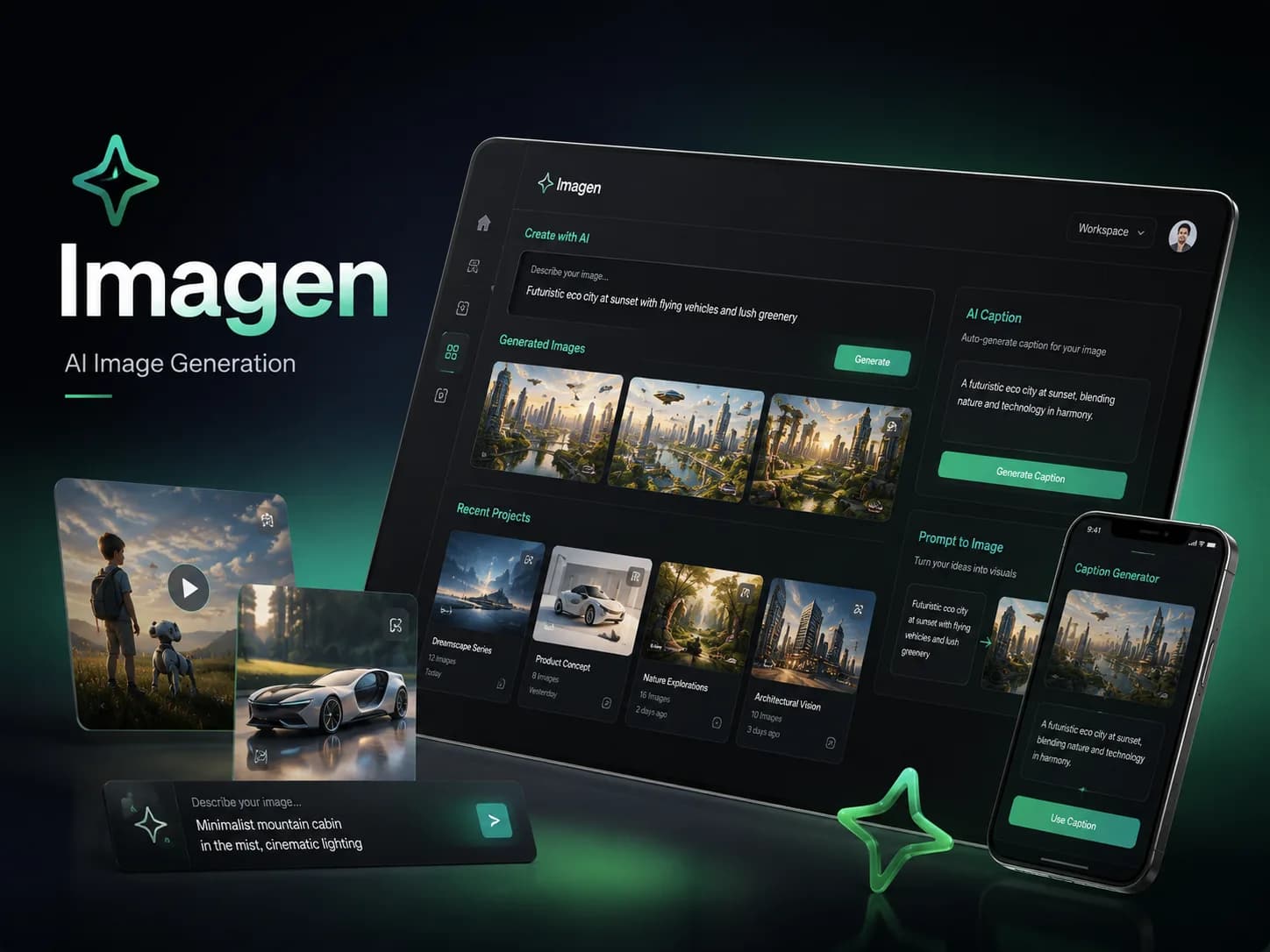
Imagen
Teams working with generative AI accumulate a drawer of disconnected tools, none of which handle a job that takes four minutes gracefully. Imagen treats long-running work as the normal case rather than the exception, and puts every workflow behind one orchestrator.
- Python
- WebSockets
- OpenAI
- Gemini
- Fal AI
- Cloudflare R2
The problem
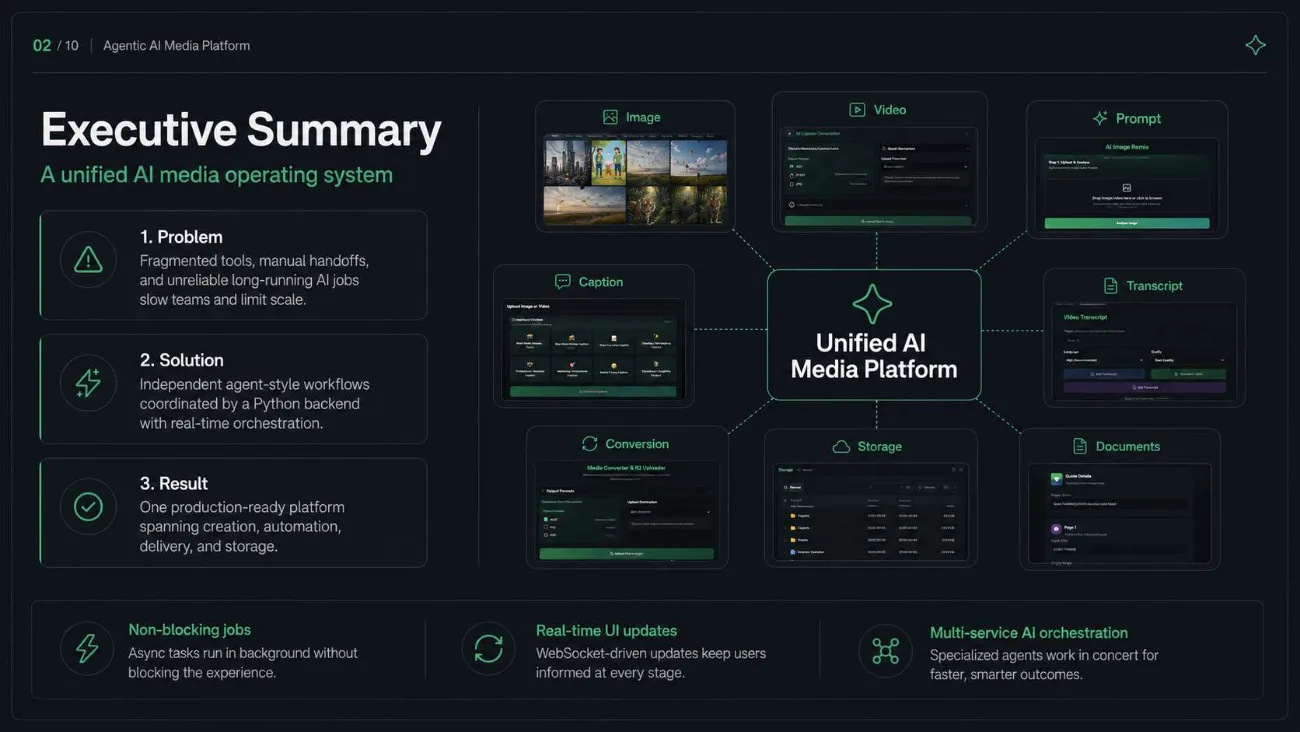
Image generation, video workflows, prompt engineering, transcription and media conversion each live in a different tool. They are slow to manage, hard to automate, and unreliable once a job runs long enough that a request cannot simply be held open.
What we built
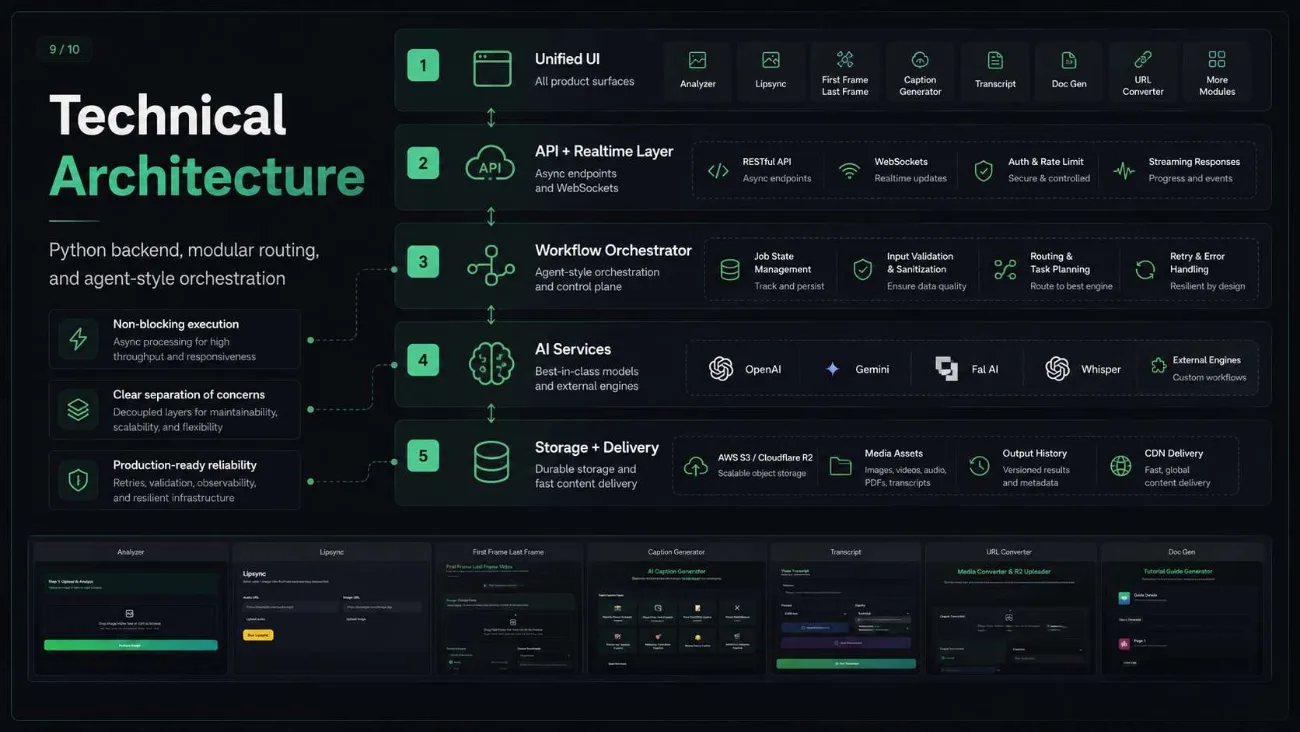
Every feature is an independent agent-style workflow coordinated by a Python backend that owns execution, state and reliability. Nothing blocks: async tasks run in the background and the interface is updated over WebSockets at every stage.
How it works
Gallery as the working surface
The dashboard is an infinite-scroll gallery of generated images with real-time updates, and generation starts from the feed rather than from a separate form.
Analysis that becomes a prompt you can edit
Uploaded images and video are analysed to extract a prompt, which can then be edited and re-run to produce variations. Video inputs stream their analysis as it is produced rather than making you wait for the whole file.
First-frame / last-frame video
Video is generated from a starting image and an optional ending frame, with user instructions translated into precise animation prompts and long jobs tracked by async polling.
Captions and transcripts at volume
Multiple caption styles are generated concurrently for one image or video with automatic media compression. Media is also pulled from a URL and transcribed, with titles, durations and thumbnails extracted automatically.
A prompt lab separate from production
Raw prompts can be run across models with direct control over seeds, aspect ratios and safety settings, the tool you need when tuning, kept apart from the tools you use when producing.
Orchestration that is resilient by design
The workflow orchestrator handles job state management, input validation and sanitisation, routing to the best engine for the task, and retry and error handling, the parts that decide whether a long-running AI job is dependable or merely impressive.
In the product
Outcome
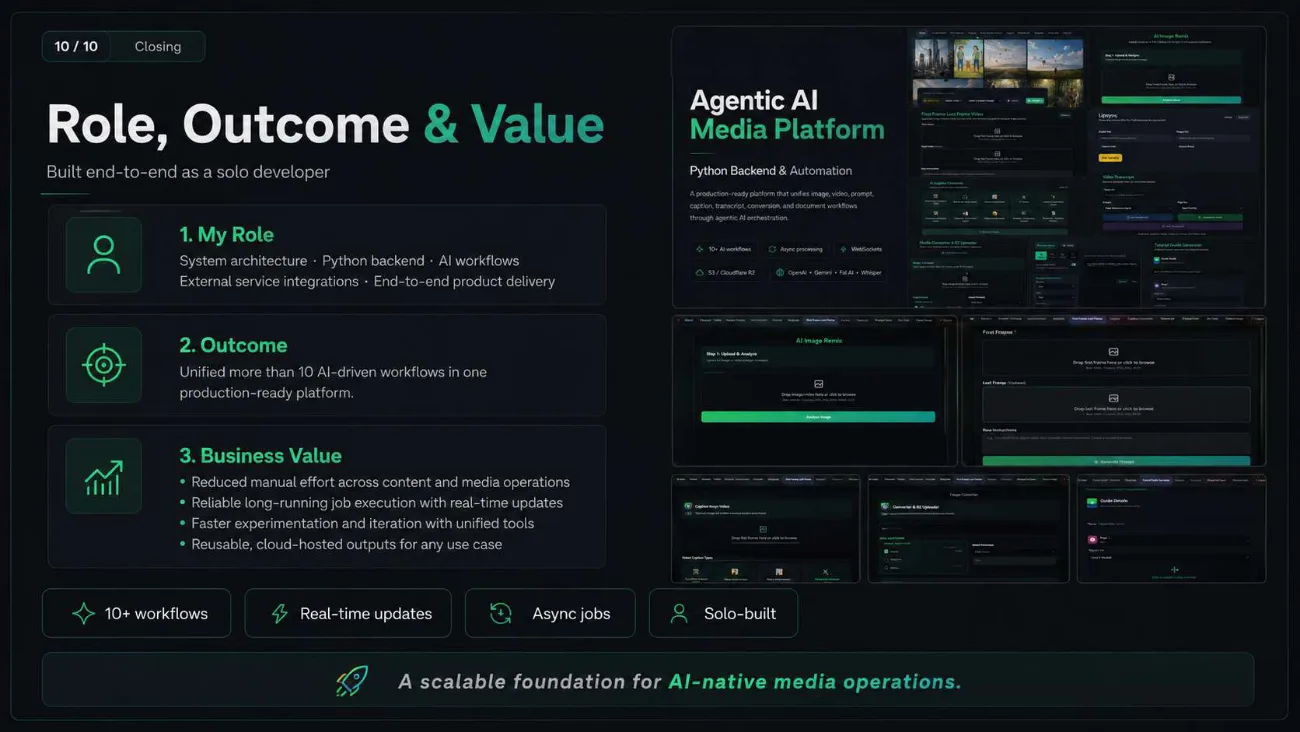
More than ten AI-driven workflows run inside one production-ready platform, with long jobs executing reliably, progress reported in real time, and every output cloud-hosted and reusable.