Support teams rarely distrust AI because it is slow. They distrust it because it is confidently wrong, and because when it fails they inherit an annoyed customer and no context. We designed Ampere, our support copilot, around one assumption: the AI will sometimes be wrong. Everything else follows from that.
Why do AI support bots lose the trust of support teams?
They fail in three predictable ways. They hallucinate, inventing pricing or features that do not exist. They trap the customer with no clear route to a person. And they leave agents without live context, so a question the bot already half-answered gets answered again from scratch.
Each failure needs its own fix. A better model does not solve any of them on its own.
How do you stop a support bot from inventing answers?
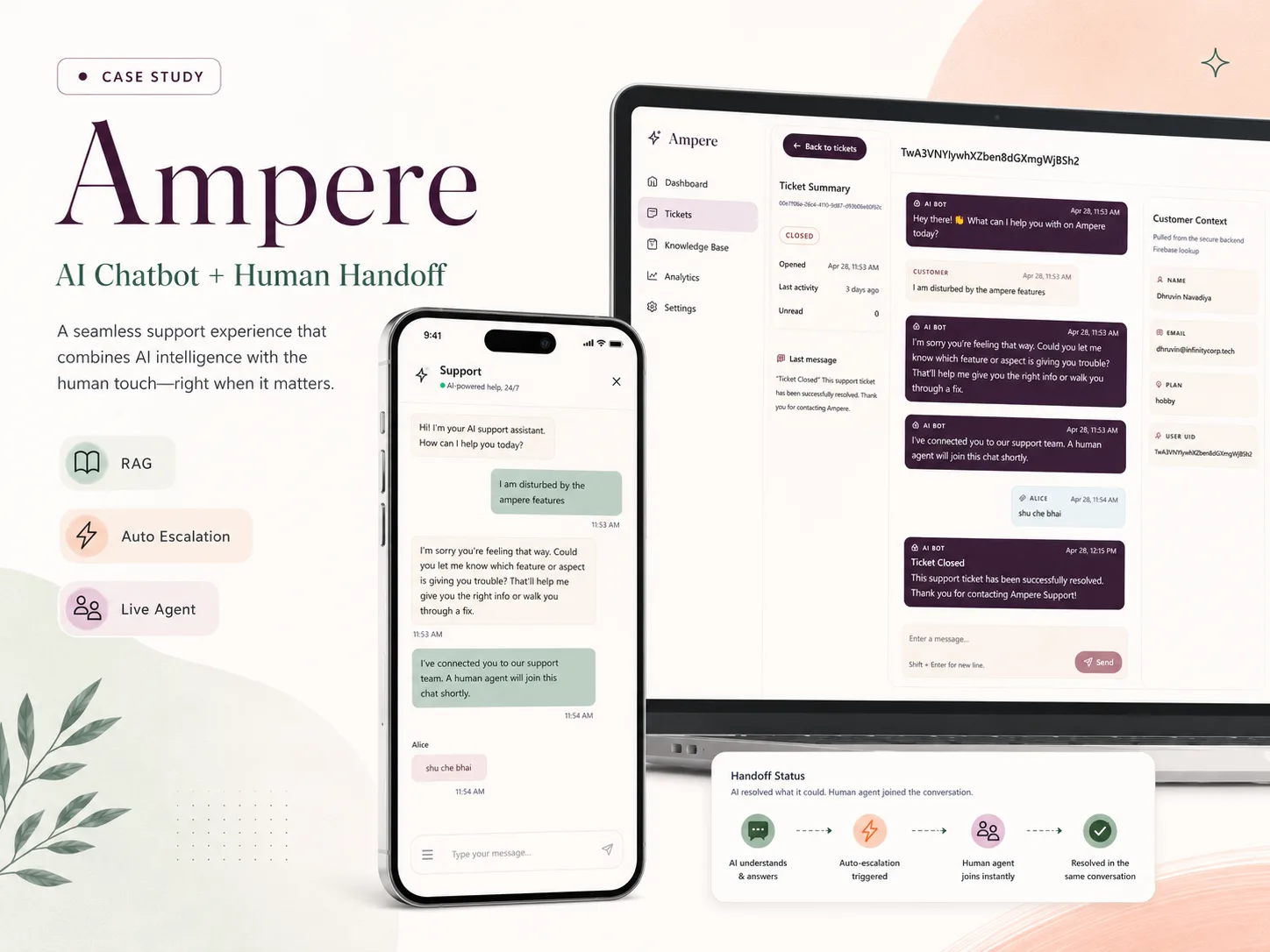
Restrict it to your documentation. Ampere uses retrieval-augmented generation: it loads a knowledge base and is instructed to answer strictly from it, citing its top sources with their match scores. If the answer is not in the documents, the right behaviour is to say so, not to improvise.
That constraint is what stops a bot quoting a pricing tier you never offered. It also makes the bot's limits visible, which is what the next step depends on.
When should AI hand a conversation to a human?
At the moment it stops being useful, not after the customer gives up. Every AI response is scanned before it reaches the customer, and a failure signal in the text attaches an escalation button to that message. The customer is offered a person exactly where the AI is unsure.
The handoff happens inside the same window. The agent joins the conversation the customer is already in, with the full AI transcript above it, and a Discord alert tells the team someone is waiting, so nobody has to watch a dashboard.
What context does a support agent need at handoff?
Who the customer is and what has already been said. The widget passes the customer's ID from the host site's login, and the backend resolves their name, email and subscription plan through a secure Firebase lookup and attaches it to the ticket. The agent knows whether this is a free or paying customer before typing a word.
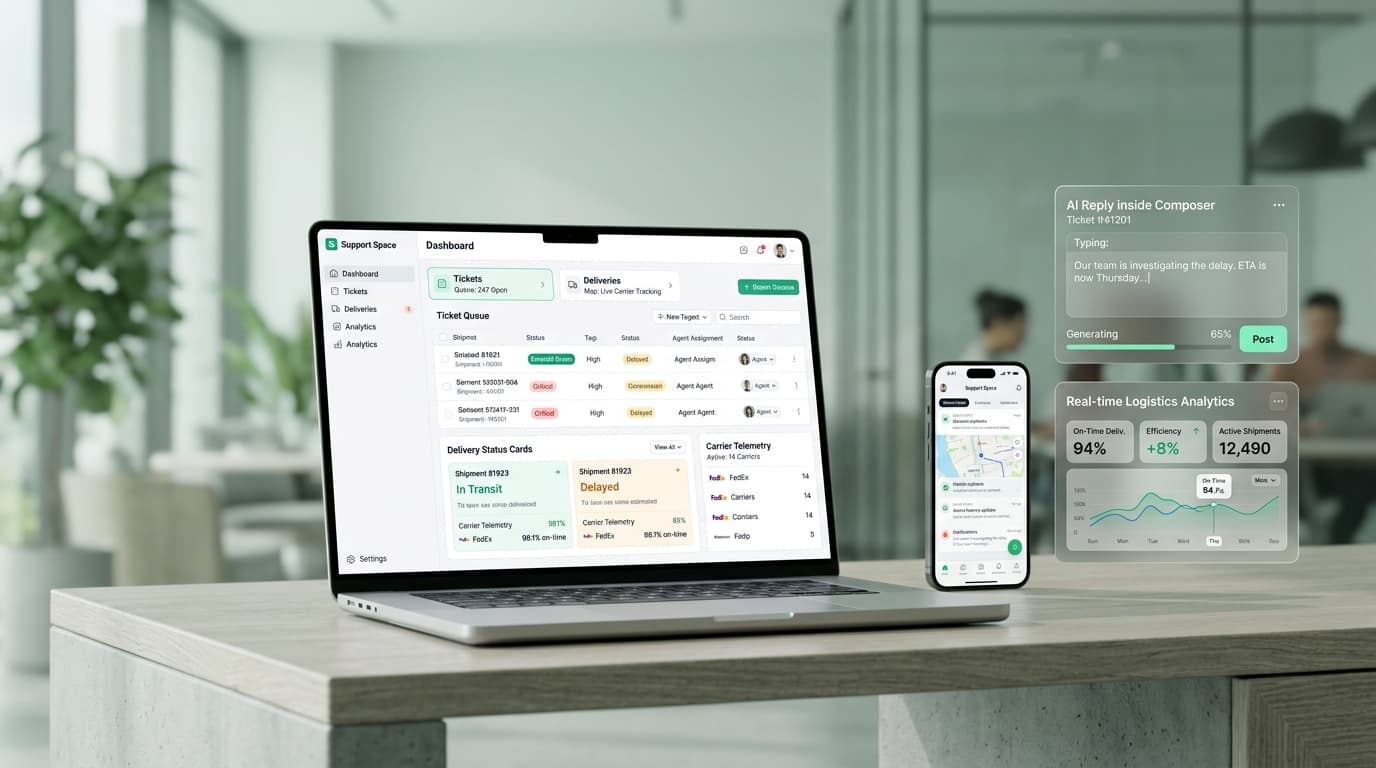
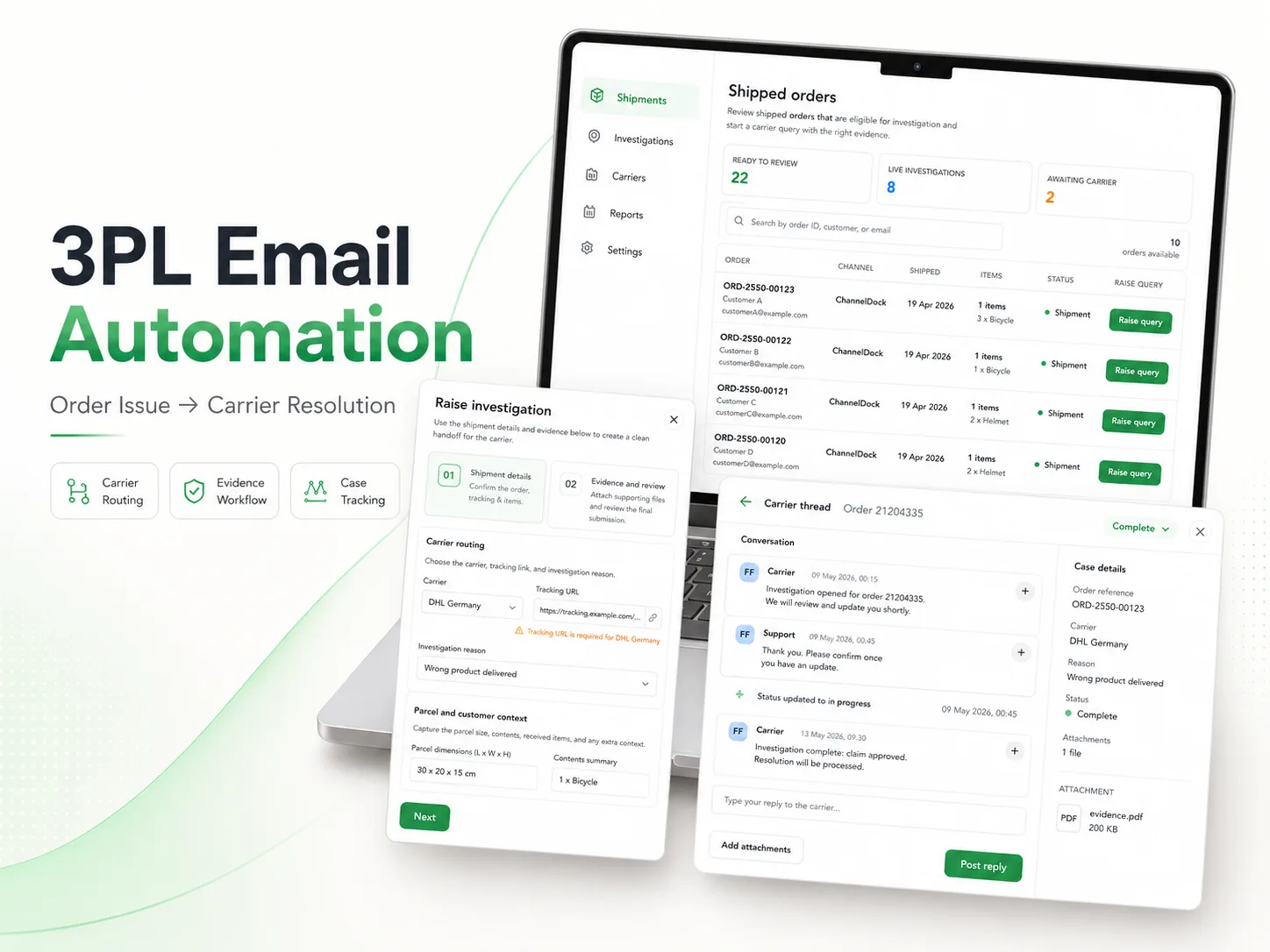
Ticket status syncs live across every logged-in agent, so when a ticket flips to human-handled, everyone sees it. That is what stops two agents working the same case. Support Space, the 3PL platform we built, applies the same idea to email and platform support: folders, tickets and the active conversation stay on screen together in one three-pane workspace.
How does an AI support system improve over time?
By treating every failure as a work item. Questions that triggered escalation land in an unanswered-questions view, so each miss becomes a specific line for whoever maintains the knowledge base. Once the documentation is updated, the bot answers that question itself.
That loop is what earns trust. Agents see the AI admit what it does not know, and they see the gaps close. Build that, and the team will use the tool instead of working around it.