We build AI workflows both ways. Our customer feedback analyzer runs as six nodes in n8n. Our document AI pipeline, the carrier investigation portal and the Ampere support copilot are custom code. Neither choice was ideological, and the line between them is easier to draw than most comparisons suggest. Here is the filter we use.
When is n8n the right choice for an AI workflow?
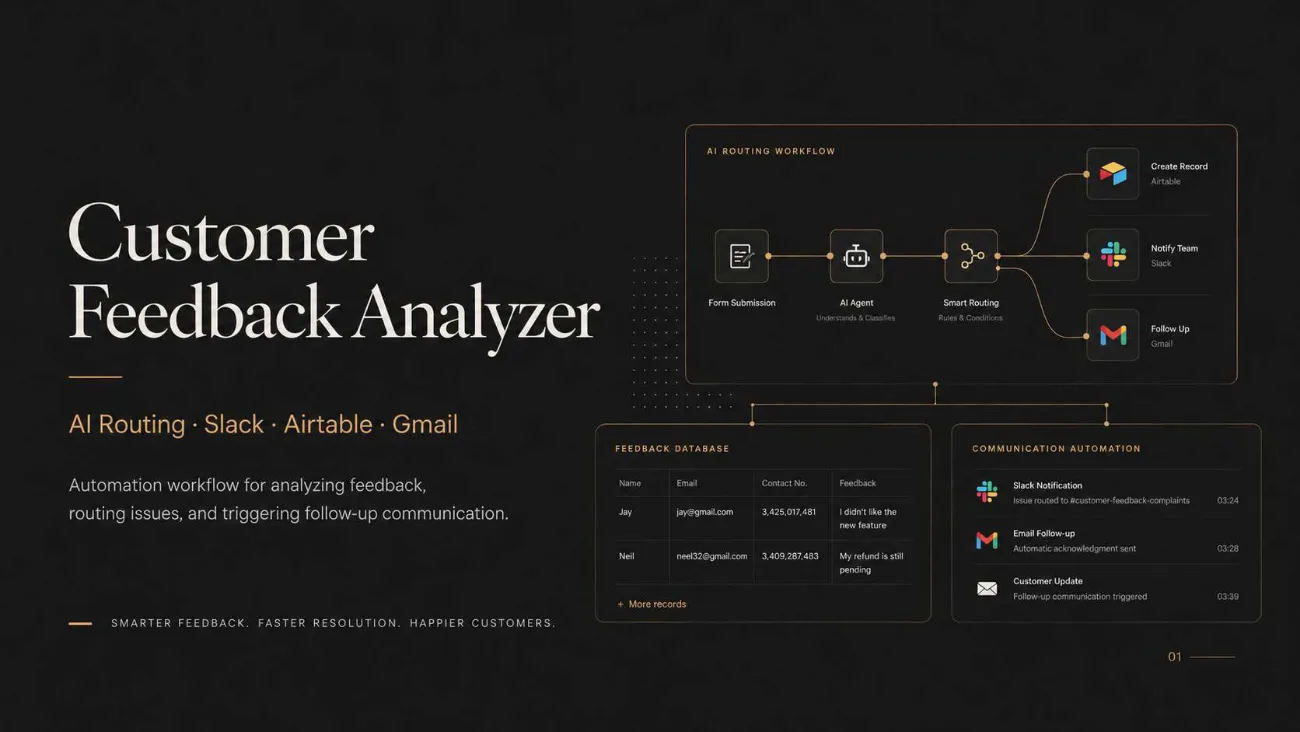
When the workflow is a straight line between tools you already use. The feedback analyzer takes a form submission, has an LLM classify what it is about and how urgent it is, routes it by explicit rules, writes it to Airtable, notifies the right Slack channel and sends a Gmail acknowledgement. Six nodes, one workflow.
Every step there is a connector n8n already has, the logic is a handful of rules, and the people running it can read the whole flow on one screen. Writing it as custom code would add a codebase to maintain without adding anything the business needs.
When does custom code win?
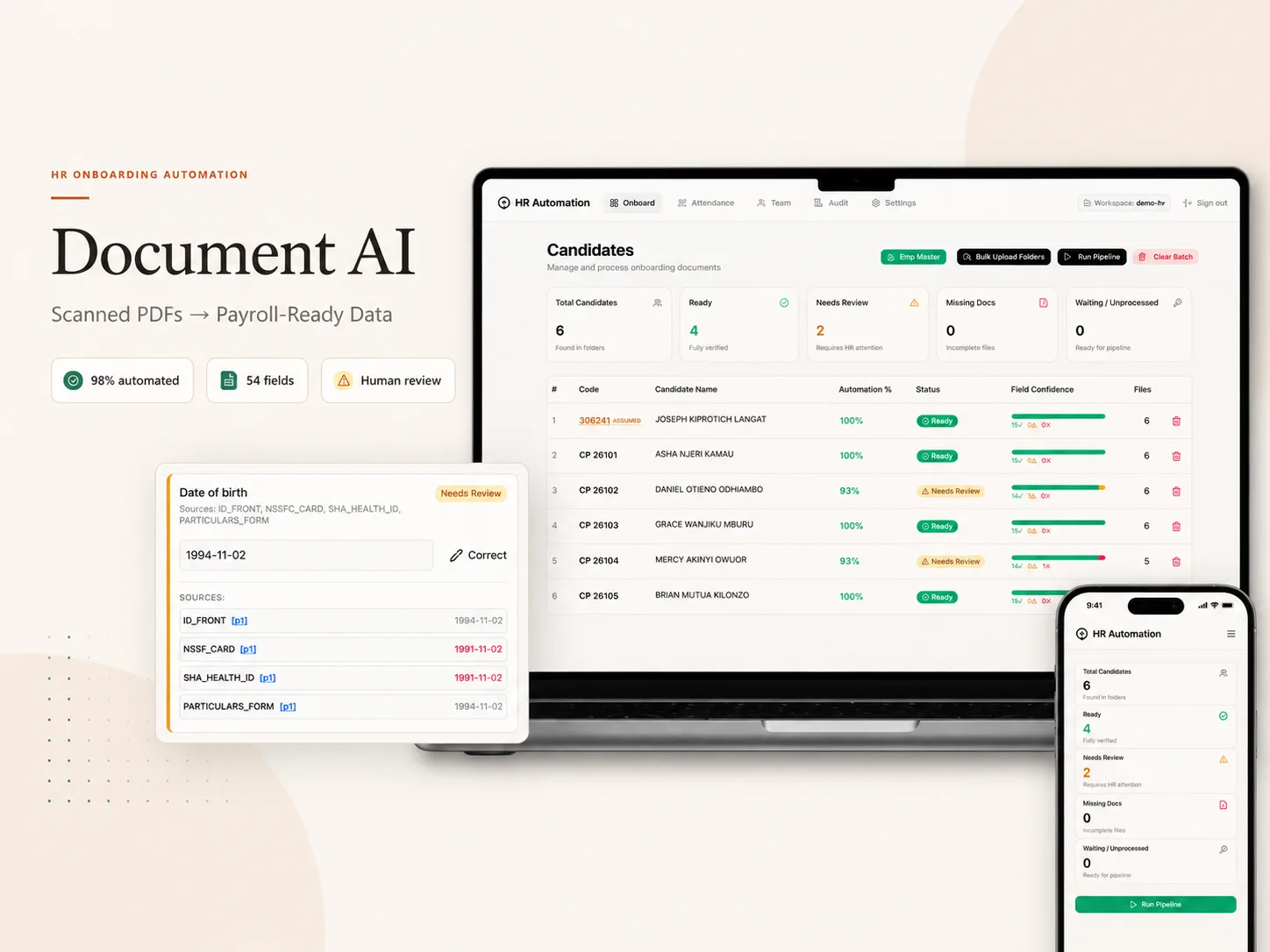
When the hard part is not the connections but the judgement between them. In our document AI pipeline, the difficult work is deciding what to do when two documents disagree: values are cross-checked across documents, a lone mismatch against a firm majority is overruled but recorded, and with no majority the field goes to a person with the evidence attached.
Rules like that are much easier to build, test and reason about as code. So are the parts around them: per-page caching so a late document re-reads one page instead of four hundred, an audit trail that records who confirmed a field but never the value, and jobs that scale to zero between intakes.
What about workflows people work inside all day?
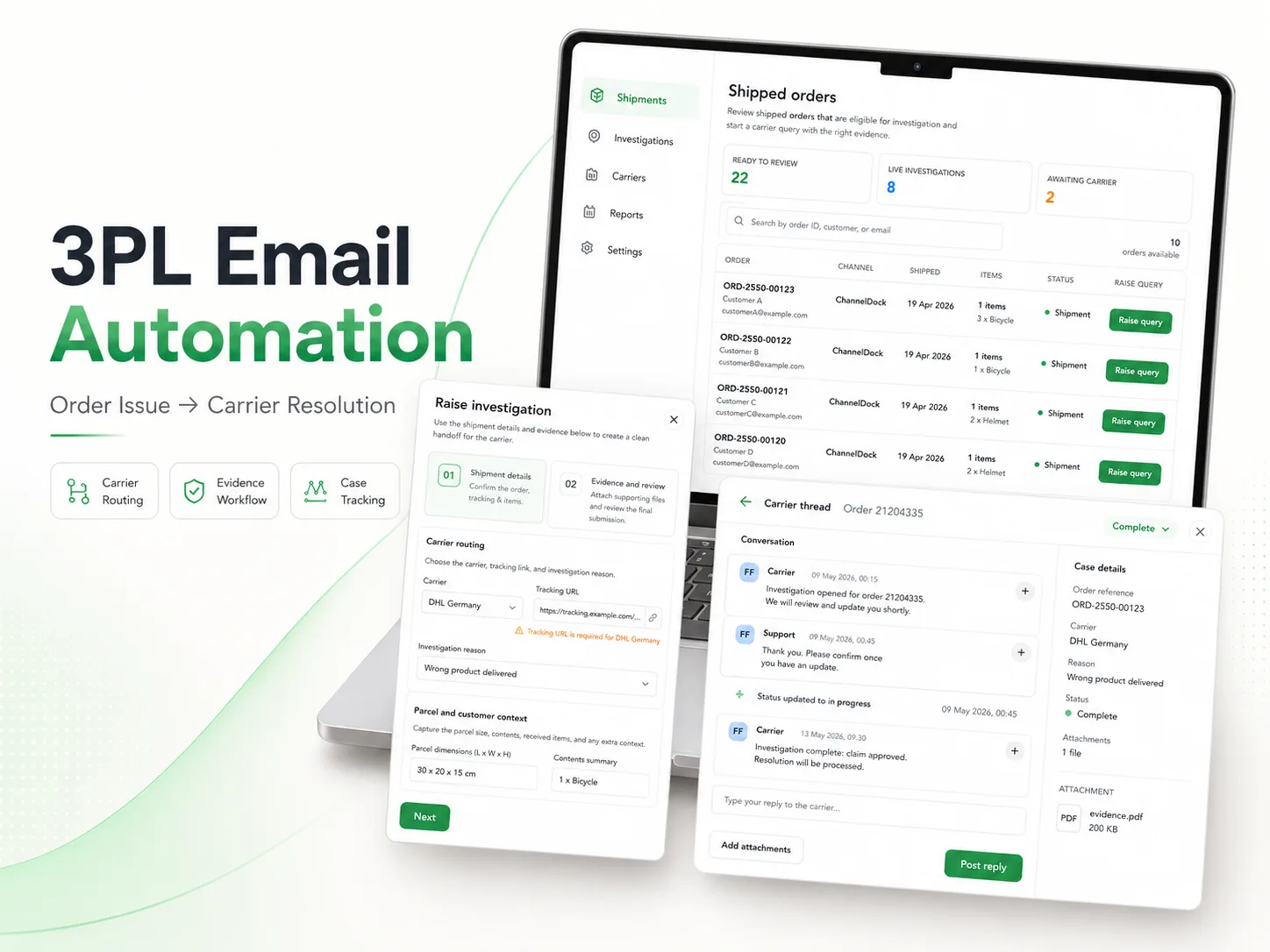
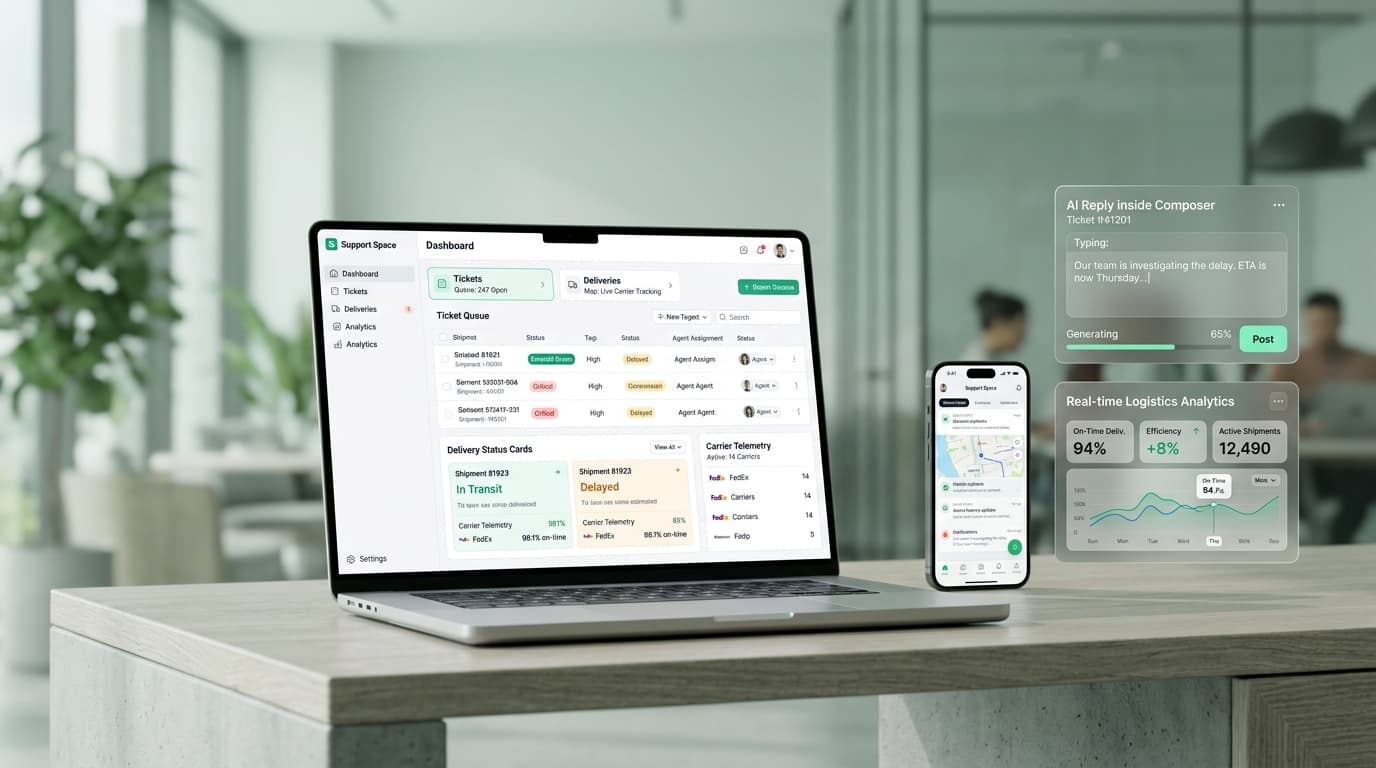
Then you need an application, and that settles it. The carrier investigation workflow has a queue, a two-step wizard with per-carrier validation, a seller-facing portal and a multi-language interface. Ampere needs live sockets so ticket status syncs across every agent. A workflow tool can run behind products like these, but it cannot be the product people use all day.
How do we decide between n8n and custom code?
We ask four questions. Is it a linear chain of tools you already use? Lean towards n8n. Does it need its own rules for conflicting or uncertain data? Lean towards code. Will people work inside it every day, or will customers see it? Code. Does the cost depend on scale, such as metered model calls or idle servers? Code gives you that control.
Starting a workflow in n8n and rebuilding it as code once it proves its worth is a reasonable path. The signal to move is when the flow stops being a straight line.